Tag Archives: FIRST STEP Act

Circuit Split on Extent of § 2244 Permission May Portend SCOTUS Review – Update for March 13, 2026

We post news and comment on federal criminal justice issues, focused primarily on trial and post-conviction matters, legislative initiatives, and sentencing issues.

RAGLAND’S BEST…

Michael Ragland won one at the 11th Circuit last week, convincing the appeals court on rehearing that because his pre-First Step Act sentence had been vacated after the FSA passed, he should be resentenced under the Act (which would cut out excess time on six 18 USC § 924(c) convictions, dropping his sentence from 172 to about 65 years).

Prior to the FSA, passed December 21, 2018, anyone convicted of a second § 924(c) conviction for using or possessing a gun during a drug or violent crime – even if the offense occurred on a successive day – would receive a mandatory minimum sentence of 25 years on top of any sentence for any other count.  Sell a half pound of pot every day for a week, and you would be sentenced for selling 3.5 lbs. of weed (maybe 21 months in prison, not a lot under the Guideline). Selling that pot with a gun stuck in your pants, and before First Step, you would pile seven § 924(c) counts onto your sentence.  The first one would add at least 5 years to your 21 months. But § 924(c) counts for successive days would add a whopping 150 years – 25 years per count – to the total. Your sentence just became 1,881 months in prison.

We have covered all of this before. Remember the pancakes?

That wasn’t what § 924(c) was intended to do.  Rather, Congress meant that if you got convicted of possessing, using or carrying a gun during a violent or drug crime, did your time, and then got convicted of another § 924(c) offense after you got out, you hadn’t learned a thing. A 25-year sentence is just what you need.  But Congress was sloppy, writing the statute to say that any subsequent § 924(c) offense – even if it happened the next day or even an hour later – carried the 25 years. U.S. Attorneys back then were not known for moderation (unlike these days, when they’re known for not telling the truth). The “stacking” aspect of the old § 924(c) statute was an irresistible tool to them.

FSA changed that. Now, for the 25-year mandatory minimum to apply, you have to have been convicted of a prior § 924(c). That would still give our hypothetical weed seller with a gun stuck in his pants a minimum sentence of 21 months plus a mandatory 420 months for the gun, but his sentence would have at least become merely excessive rather than stratospheric.

Unfortunately, the FSA change to § 924(c) did not apply retroactively to people already sentenced. That caused some weirdly unjust outcomes. If our hypothetical weed seller had been sentenced on December 1, 2018, he would have gotten the full 1,881 months. Had his sentence been imposed just a month later, on January 2, 2019, his sentence would have been about 24% of that.

What was even more unfair (if that were possible) was that people sentenced before FSA passed but had their sentences vacated on appeal (requiring resentencing) were being denied FSA’s protection when the new sentence was imposed, because their first sentence had been handed down before FSA passed.

The Supreme Court’s 2025 decision in Hewitt v. United States fixed that anomaly, holding that any § 924(c) sentence – even a resentencing – imposed after First Step became law had to comply with the FSA. Thus, for Mike Ragland, last week’s outcome was preordained by Hewitt and surprised no one. The decision is interesting, instead, for its potential as the next Supreme Court § 2255 procedure case.

Mike previously got permission under 28 USC § 2244 to file a second or successive § 2255 petition raising the § 924(c) resentencing issue. But while the § 2255 motion was pending in the district court, he asked permission to amend it to raise other sentencing issues. The district court refused Mike unless he got approval from the 11th Circuit to file yet another successive § 2255 motion.

In last week’s decision, the 11th agreed with the district court that Mike had to file a fresh § 2244 request for a second or successive § 2255 if he had other issues to raise.

The 11th said,

Here, we authorized Ragland to raise ‘one claim’ in his successive § 2255 motion: that he was actually innocent of Count Sixteen… Ragland argues that the 7th Circuit in Reyes v. United States reached a different result on similar facts… The 4th Circuit has also adopted this approach… To the extent our sister courts permit movants to add new claims that have not been screened, and which exceed the bounds of the leave granted by the court of appeals, we respectfully disagree…

The Circuit split on this procedural question is the kind of issue the Supreme Court lives for. Don’t be surprised to see it on SCOTUS’s docket next term.

United States v. Ragland, Case No. 23-12278, 2026 U.S. App. LEXIS 6612 (11th Cir. March 5, 2026).

Hewitt v. United States, 606 U.S. 419, 145 S.Ct. 2165 (2025)

~ Thomas L. Root

Shocking News from GAO! BOP Has Messed Up FSA Placement! Who’d Have Guessed? – Update for February 17, 2026

We post news and comment on federal criminal justice issues, focused primarily on trial and post-conviction matters, legislative initiatives, and sentencing issues.

GAO PAINTS PICTURE OF DEADBEAT BOP’S CHAOTIC HALFWAY HOUSE MANAGEMENT

The Government Accountability Office painted a bleak picture of the Bureau of Prisons’ halfway house placement program, a chaos of mismanagement that deprives inmates of First Step Act credits they have earned and halfway house operators of payments they are owed.

The 7-year-old First Step Act encourages federal prisoners to complete programs proven to reduce recidivism by promising them earned time credits that can shorten sentences and extend their time in prerelease custody in Residential Reentry Centers or RRCs (which we know as halfway houses) and on home confinement. Writing in Forbes last week, Walter Pavlo said, “Lawmakers understood what correctional professionals have long known. The last months of a sentence should focus on reconnecting people to jobs, housing, and families, not warehousing them in prison.”

Reality, however, is muted. The GAO reports that not only has the BOP not consistently moved eligible inmates into halfway houses on time, but often, the BOP does not even know how many people are eligible for and entitled to placement.

The Report said that “BOP officials said they do not know because the dates individuals are eligible to transfer are not readily available… GAO found that BOP did not apply all the earned time toward placement in RRCs and home confinement for 21,190 of 29,934 individuals reviewed, for reasons such as insufficient RRC capacity and court orders. However, the full scale of this issue is unknown due to the lack of readily available data on eligibility dates.”

The problem has been due in part to limited capacity in BOP-contracted halfway house and home confinement spaces, BOP officials told GAO. However, the Report stated, “BOP does not know the full extent of this shortage because it has not comprehensively assessed its capacity and related budgetary needs. Without these assessments, BOP cannot ensure it has enough space for incarcerated individuals to transfer on time. BOP could also miss opportunities to increase revenues and decrease costs to the federal government.”

As of September 30, 2024, the BOP was using 91% of its contracted halfway house beds and 121% of its contracted home confinement space. A full 38% of halfway houses were at or above 95% capacity, and 62% were at or above the 95% capacity for halfway house slots. In fairness to the BOP, since William K. Marshall III assumed the Director’s slot, the agency has prioritized home confinement through the alternative Federal Location Monitoring program, managed by the US Probation Office instead of halfway house staff.

GAO also found that the BOP has been a deadbeat on a scale that would get a defendant on supervised release sent back to prison. From 2022 through March 2025, the Bureau “made roughly 65,000 late payments to contractors, including to RRCs,” according to the Report. “As a result, the agency paid $12.5 million in interest penalties as part of $2.8 billion in payments to contractors. In addition, GAO found that BOP paid RRCs late about 70% of the time, from fiscal years 2023 through 2024.”

It should be unsurprising that halfway houses would be less than enthusiastic about working with the BOP to expand their businesses: the Report said that as a result of late payments, halfway houses “face hardships due to the late payments — needing private loans to pay staff. One halfway house representative said late payments have made some halfway houses reluctant to bid for new BOP contracts, which can further complicate BOP’s plans to expand capacity.”

Pavlo wrote, “The BOP understands that it has a problem and after years of not addressing it now realize that the solution is going to take time.” A BOP spokesman said, “[T]he Bureau has actively posted Requests for Information… in more than 20 locations nationwide to expand RRC and home confinement services… With respect to home confinement, the Bureau is transferring individuals as quickly as possible once they reach their Home Confinement Eligibility Date and meet all statutory and public safety criteria. We are committed to ensuring individuals are not held longer than necessary when they are appropriate for home confinement placement.”

Government Accountability Office, Bureau of Prisons: Actions Needed Better Achieve Financial and Other Benefits of Moving Individuals to Halfway Houses on Time (February 11, 2026)

Forbes, GAO Critical of Bureau of Prisons Use of Halfway Houses (February 12, 2026)

~ Thomas L. Root

Shrinks Do A Runner And Other BOP Headaches – Update for February 3, 2026

We post news and comment on federal criminal justice issues, focused primarily on trial and post-conviction matters, legislative initiatives, and sentencing issues.

ROUGH WEEK FOR THE BOP

Last week began with The Marshall Project reporting that as of last spring, “just one in five federal prisons had a fully staffed psychology department… “[d]ozens of federal prisons nationwide had fewer than half the psychologists needed[and] at more than 10 prisons, there was one psychologist, or none.”

“Those are catastrophic numbers,” retired Bureau of Prisons psychologist Jill Roth, who served as national coordinator for the BOP’s prison rape elimination program until 2021, told TMP.  The report said that the BOP’s psychology program “used to be the envy of other correctional systems, according to psychologists who worked for the agency for decades. ‘BOP was a place psychologists were excited to work,’ Roth said. ‘It has changed.’”

TMP recounted that one BOP psychologist said he left a West Coast prison in May after he was the only staff psychologist for more than 700 people, saying that he feared that the care he could provide under those circumstances did not meet basic professional standards. “At some point it becomes unethical to continue to participate in that,” he was quoted as saying. “Can we provide this group of humans the care they’re entitled to? The answer is no. One person cannot ethically do that.”

The same day, the Dept of Justice Office of Inspector General issued its annual Top Management and Performance Challenges report to Congress, noting that the BOP “continues to face persistent challenges, most critically those presented by staffing shortages, deteriorating infrastructure, and the introduction of contraband. In recent years, deficiencies in the provision of healthcare to inmates and sexual abuse of inmates by BOP staff have emerged as additional significant challenges.”

Writing in Forbes, Walter Pavlo said, “Over the past two decades, the OIG has issued more than 100 reports documenting systemic problems at the BOP, and many of the same deficiencies appear year after year… Staffing shortages, deteriorating facilities, contraband, misconduct, and weak oversight have become familiar themes in the OIG’s annual Top Management and Performance Challenges reports. The latest report reiterates what oversight bodies have said repeatedly: the BOP’s problems are systemic, long-standing, and largely unresolved.”

The Government Accountability Office piled on the next day, reporting that for its study period of March through December 2024, the BOP has been failing in its First Step Act obligation to conduct needs assessments within required time frames, to use uniform methods to record when inmates decline to participate in a recommended program, and to keep program participation data. Most concerning, GAO found that as of the ends of 2024, the BOP had failed to apply all FSA credits to 70% of eligible inmates, and 54% of inmates received no prerelease custody credit for their earned FSA time.

GAO found that BOP generally applied all time credits toward supervised release but not for prerelease custody.

The report noted that BOP had implemented new planning tools in 2024 and 2025 to help staff anticipate upcoming transfers to prerelease custody and ensure incarcerated people receive their FSA time credits, and that GAO is currently examining BOP’s efforts to forecast capacity needs and provide sufficient halfway house and home confinement resources.

The Dept of Justice was required to issue annual FSA reports to Congress for five years after the Act passed. The last one was issued in June 2024. GAO recommended that Congress amend the law to require continued reports, because “without such information, Congress may be hindered in its decision making regarding the FSA.”

The Marshall Project, Amid ‘Catastrophic’ Shortage, Psychologists Flee Federal Prisons in Droves (January 26, 2026)

DOJ Inspector General, Top Management and Performance Challenges Facing the Department of Justice | 2025 (January 26, 2026) 

Forbes, The Bureau Of Prisons: When OIG Warnings Meet GAO Reality (January 28, 2026)

GAO, Federal Prisons: Improvements Needed to the System Used to Assess and Mitigate Incarcerated People’s Recidivism Risk, GAO-26-107268 (January 27, 2026)

~ Thomas L. Root

A Compassionate Release Win for Commutees – Update for January 6, 2026

We post news and comment on federal criminal justice issues, focused primarily on trial and post-conviction matters, legislative initiatives, and sentencing issues.

COMMUTATION DOESN’T NEGATE COMPASSIONATE RELEASE

In 2012, Jonathan Wright was sentenced to life imprisonment after a federal drug conviction. In 2024, he filed an 18 USC § 3582(c)(1) compassionate release motion based on First Step Act changes in 21 USC § 841(b)(1)(A)  mandatory minimum sentences.

The district court reduced Jon’s sentence to 420 months followed by 10 years of supervised release but never addressed Jon’s argument that his prior Arkansas convictions no longer qualified as predicate offenses for his sentence enhancement.

Jon appealed, arguing that the district court should have reduced his sentence even more. While the appeal was pending, President Joe Biden commuted Jon’s sentence to 330 months last January.

The government argued that Biden’s commutation should moot Jon’s appeal, and even if it didn’t, the Arkansas statute’s overly broad definition of controlled substance should nevertheless be read to be consistent with federal law.

Last week, the 8th Circuit gave Jon a late stocking stuffer.

Although the Circuits are split on the question, the 8th ruled that Biden’s commutation did not moot Jon’s compassionate release motion. The President’s power to commute criminal sentences derives from the Constitution – the Article II power to “grant Reprieves and Pardons.” “A commuted sentence,” the Circuit held, “does not become ‘an executive sentence in full’ but instead remains a judicial sentence – but one that the executive will only enforce to a limited extent.

As for Jon’s prior convictions under Arkansas § 5-64-401, the 8th observed that the statute incorporated a state Dept of Health regulation that defined a “narcotic drug” to include all cocaine isomers, while federal felony drug offenses encompass only optical and geometric cocaine isomers. Circuit precedent holds that a state drug statute that criminalizes even “one additional isomer” of cocaine beyond what the federal statute proscribes cannot produce a predicate felony drug offense for federal sentencing purposes.

The Circuit ruled that the district court’s decision to not consider that Jon’s priors no longer counted under § 841(b)(1)(A) when ruling on his compassionate release motion “was based on an erroneous legal conclusion and accordingly was an abuse of discretion.” When resentencing Jon on remand, the 8th directed, the “district court is required only to considerthat Jon ‘s prior convictions no longer qualify as predicate offenses for his sentence enhancement. The district court is not required to accept this point as a reason to further reduce Jon’s sentence.”

This opinion is significant, ruling in essence that at least in the 8th Circuit, changes in the law creating gross disparities between the existing sentence and the sentence if imposed today have a substantial role in the compassionate release calculus.

United States v. Wright, Case No. 24-2057, 2025 U.S. App. LEXIS 33882 (8th Cir. December 30, 2025)

~ Thomas  L. Root

First Step Act Reform Coming Around Again in the Senate? – Update for December 22, 2025

We post news and comment on federal criminal justice issues, focused primarily on trial and post-conviction matters, legislative initiatives, and sentencing issues.


WHAT’S OLD IS NEW

The legendary Congressional odd couple – a conservative farm-country nonagenarian and liberal urban ex-bar owner – who brought you the First Step Act seven years ago are at it again.

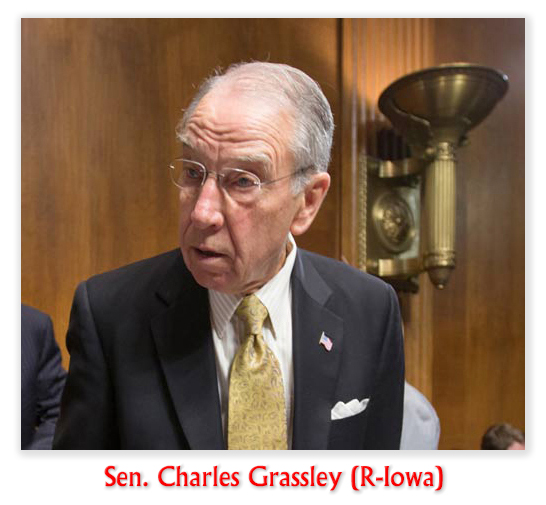
Senate Judiciary Committee Chairman Charles Grassley (R-IA) and Ranking Member Richard Durbin (D-IL) last week introduced several bills – all of which have been proposed before without passage – to restore some of what has expired and other FSA “fixes” needed since 2018.

The First Step Implementation Act would permit district courts to apply First Step Act sentencing reform provisions retroactively, enhance the discretion courts have when sentencing nonviolent drug offenders, and permit sealing or expunging of records of nonviolent juvenile offenses.

The Safer Detention Act would reauthorize and reform the now-expired Elderly Home Detention Pilot Program (which ended in September 2023) and make technical corrections in 18 USC § 3582(c) to benefit compassionate release procedure.

The Prohibiting Punishment of Acquitted Conduct Acta reprise of the 2023 bill – would prohibit judges from considering conduct of which defendants had been acquitted by juries in setting sentences. The bill would take a legislative stand on an issue that the Supreme Court has so far refused to consider as a constitutional issue.

The First Step Implementation Act, the Safer Detention Act and the Prohibiting Punishment of Acquitted Conduct Act are endorsed by organizations running the gamut from the ACLU and Dream.org to Right On Crime and the Conservative Political Action Conference.

“Each of these bills strengthens public safety in a different way – by ensuring fairness at sentencing, focusing resources on dangerous individuals, and fully implementing reforms that reduce recidivism,” Brett Tolman, executive director of Right On Crime said. “Together, they move the federal system toward a smarter, more accountable, and more effective approach to public safety.”

Given that Charles Grassley is chairman of the Judiciary Committee, the bills are likely to get a hearing. However, the bills all made it to the Senate floor in 2022, only to die at the end of the session without consideration.

Grassley’s Senate term does not expire until 2028, but Durbin’s expires in December 2026. Durbin has announced that he will not seek reelection.

Senate Committee on the Judiciary, Durbin, Grassley Introduce Criminal Justice Reform Bills (December 16, 2025)

First Act Implementation Act of 2025 (S. —) (submitted December 16, 2025)

Safer Detention Act (S. —) (submitted December 16, 2025)


Prohibiting Punishment of Acquitted Conduct Act of 2025 (S. —), (submitted December 16, 2025)

~ Thomas  L. Root

Bureau of Prisons Slipping on ICE – Update for November 25, 2025

We post news and comment on federal criminal justice issues, focused primarily on trial and post-conviction matters, legislative initiatives, and sentencing issues.

THAT GIANT SUCKING SOUND…

Remember H. Ross Perot? During his unsuccessful third-party bid for president in 1992, he warned that the “giant sucking sound” we all heard was the sound of jobs going to Mexico.

It turns out that Bureau of Prisons director William K. Marshall III is hearing one of his own, the sound of BOP correctional officers quitting for the gold-plated working conditions of Immigration and Customs Enforcement.

Last week, Pro Publica reported that “ICE has been on a recruiting blitz, offering $50,000 starting bonuses and tuition reimbursement at an agency that has long offered better pay than the federal prison system. For many corrections officers, it’s been an easy sell.”

By the start of November, the BOP had lost at least 1,400 more staff this year than it had hired, according to ProPublica. “We’re broken and we’re being poached by ICE,” one union official told ProPublica. “It’s unbelievable. People are leaving in droves.”

The exodus comes amid shortages of critical supplies. Staffers told Pro Publica that some facilities had even stopped providing basic hygiene items for officers, such as paper towels, soap and toilet paper.

Fewer corrections officers result in more lockdowns, less programming, fewer health care services for inmates, greater risks to staff, and more grueling hours of mandatory overtime. Prison teachers and medical staff are being forced to step in as corrections officers on a regular basis.

In a video posted last Wednesday afternoon, Deputy Director Josh Smith said that the agency was “left in shambles by the previous administration” and would take years to repair. Staffing levels, he said, were “catastrophic,” which, along with crumbling infrastructure and corruption, had made the prisons less safe.

He also frankly appraised the agency’s approach to the First Step Act:

The First Step Act was sabotaged by the Biden DOJ and BOP.  They have mismanaged millions meant for FSA implementation – building a time credit calculator that has never worked right – and FSA programming required by the law never materialized. Instead, they hired an outside contractor that blocked every outside program submitted by some of the most impactful faith-based organizations. They only approved internal BOP classes, and, despite spending hundreds of millions of dollars, the BOP still only added 100 halfway house beds in six years… all while reentry services division lost over 90 critical positions.

They diverted hundreds of millions of First Step Act funding into non-FSA programming and unrelated projects that they just labeled ‘FSA.’ This mismanagement squandered taxpayer money and undermined public safety. Lockdowns and collective punishment have become knee-jerk reactions… BOP has been consistently voted the worst place to work in all the federal government… This is the hand that we’ve been dealt, a Bureau on the brink scarred by decades of failure…

The so-called One Big Beautiful Bill Act, signed into law on July 4th, could offer some financial support for the agency’s staffing woes, as it will route another $5 billion to the BOP over four years — $3 billion of which is specifically earmarked to improve retention, hiring and training. Yet exactly what the effects of that cash infusion will look like remains to be seen: Pro Publica reported that the “Bureau declined to answer questions about when it will receive the money or how it will be spent.”

Pro Publica, “We’re Broken”: As Federal Prisons Run Low on Food and Toilet Paper, Corrections Officers Are Leaving in Droves for ICE (November 20, 2025)

BOP, Video Message from the Deputy Director: A Bureau on the Brink (November 19, 2025)

~ Thomas L. Root

SCOTUS Oral Argument Lacks Compassion for Compassionate Release Cases – Update for November 17, 2025

We post news and comment on federal criminal justice issues, focused primarily on trial and post-conviction matters, legislative initiatives, and sentencing issues.

ARE YOU DISRESPECTING ME?

An uncomfortable number of Supreme Court justices last Wednesday questioned whether the United States Sentencing Commission overstepped its authority when it amended USSG § 1B1.13(b)(6) to hold that changes in mandatory minimum laws – even when not retroactive – and concerns about actual innocence could be part of a court’s consideration when weighing an 18 USC § 3582(c)(1)(A) compassionate release motion.

I learned as a young lawyer (many years ago) that trying to predict the outcome of an appellate case based on the oral argument was a fool’s errand. Still, the nearly three hours of argument last Wednesday on what should be or should not be extraordinary and compelling reasons judges must consider in granting § 3582(c) sentence reductions provided little reason for optimism.

The issue was whether extraordinary and compelling reasons include factors like trial errors or nonretroactive changes in the law.  Lawyers for Daniel Rutherford and John Carter, two inmates seeking such sentence reductions, argued that the Commission was within its legal authority to say that courts could consider whether the First Step Act’s nonretroactive changes to gun and drug mandatory minimums would have resulted in lesser sentences in their cases.

In a third case, Fernandez v. United States, a district court had granted Joe Fernandez compassionate release in part because the judge felt “disquiet” about the conviction due to questions about whether the witness who had fingered Joe had lied to save his own skin. The 2nd Circuit Court of Appeals rejected the compassionate release, arguing that Joe’s innocence claim should have been brought up in a 28 USC § 2255 habeas challenge instead.

A § 3582(c)(1) sentence reduction, known a little inaccurately as “compassionate release,” permits courts to reduce criminal sentences in certain cases. Before 2018, the Bureau of Prisons was the only entity that could file a motion for such consideration, but the First Step Act eliminated that requirement. The Sentencing Commission is charged by 28 USC § 994(t) with the responsibility for defining what constitutes an extraordinary and compelling reason, and has expanded such to include medical conditions, family circumstances and age. The compassionate release guideline amendment in November 2023 adopted a broader view of compassionate release factors that included changes in the law that would have made a prisoner’s sentence much shorter if those changes had been in force when he got sentenced.

During Wednesday’s arguments, the only Justice of the nine expressing sympathy for Rutherford, Carter, and Fernandez was Ketanji Brown Jackson. All of the others seemed concerned that the changes in USSG § 1B1.13(b)(6) thwarted Congress’s will, would result in a flood of compassionate release motions, and would permit an end-run on § 2255.

Jackson maintained that the § 2255 and compassionate release considerations were not mutually exclusive. Instead, Jackson said compassionate release was intended to work as a safety valve.

“The question is, ‘safety valve for what?” Justice Elana Kagan countered. “Not every safety valve is a safety valve for everything.”

Justice Sonia Sotomayor said a district judge’s doubts about a jury verdict shouldn’t be used as a factor in compassionate release claims. “It happens to every district court judge,” she said. “There’s a case where you really struggle, but can we, in the facts of this case, denote that that is an extraordinary circumstance?”

Justice Neil Gorsuch contended that the judge’s own feelings, even if reasonable, should have nothing to do with the defendant’s circumstances for compassionate release. “I thought, in our legal system, the jury’s verdict on the facts is not something a court can impeach unless it’s clearly erroneous,” Gorsuch said. He suggested that the Commission had been “disrespectful” by substituting its own position on retroactivity for Congress’s.

In the Fernandez case, the Court appeared uneasy with allowing judges to consider factors that also fall under the federal habeas statute. Kagan said that habeas claims face harsh limitations and questioned whether inmates might use compassionate release as an end-run around those prohibitions.

Justice Samuel Alito observed, “The First Step Act was obviously heavily negotiated… and retroactivity is, of course, always a key element in the negotiations. Congress specifically says this is not going to be retroactive to those cases where sentences have already been imposed. And then the [Sentencing] Commission, though, then comes in and says we’re now going to give a second look for district judges to revisit those sentences…”

Justice Amy Coney Barrett asked whether a judge’s disagreement with the mandatory minimums could be enough justification for a compassionate release grant. David Frederick of Kellogg Hansen Todd Figel & Frederick PLLC, representing Rutherford, replied that even if a judge thinks a sentence is too harsh or if it would have been lower after the sentencing reforms, the Sentencing Commission’s guidelines require other factors, like a prisoner’s age, health and family situation, to be part of the overall picture.

Chief Justice John Roberts worried that the Sentencing Commission was opening the floodgates to applications for compassionate release. Currently, the 3rd, 5th, 6th, 7th, 8th and D.C. circuits have ruled that the Commission’s interpretation exceeds its authority and is wrong, while the 1st, 4th, 9th and 10th circuits have allowed courts to consider the disparity between pre- and post-First Step Act sentences.

Writing in his Sentencing Law and Policy blog, Ohio State University law professor Doug Berman – who filed an amicus brief supporting Rutherford, Carter and Fernandez – was pessimistic about the outcome of the cases:

But the Justices seem poised to concoct some new legal limits on equitable sentence reduction motions, though it remains unclear exactly how they will decide to legislate from the bench in this context. There was some interesting discussion during the Fernandez case about which of various possible restrictions relating to § 2255 that the government wanted the Justices to enact. And in Rutherford/Carter, the Justices expressed in various ways which sentencing statutes they thought might create implicit limits on the bases for sentencing reductions. Just how the Justices decide to act as lawmakers and policymakers in this setting will be interesting to see.

Bloomberg Law observed, “The court’s decisions in the cases could have a chilling or stimulating effect on compassionate release petitions. The Sentencing Commission reports they have increased dramatically since passage of the First Step Act and the pandemic, with more than 3,000 filed across the country last year.”

A decision is not expected until next spring.

Fernandez v. United States, Case No. 24-556 (Supreme Court oral argument November 12, 2025)

Rutherford v. United States, Case No. 24-820 (Supreme Court oral argument November 12, 2025)

Carter v. United States, Case No. 24-860 (Supreme Court oral argument November 12, 2025)

Law360, Justices Hint Early Release Factors ‘Countermand’ Congress (November 12, 2025)

WITN-TV, Supreme Court to weigh limits on compassionate release (November 12, 2025)

Courthouse News Service, Supreme Court disquieted by increased judicial discretion over compassionate release (November 12, 2025)

Sentencing Law and Policy, Justices seem eager to concoct limits on grounds for sentence reductions, but what new policy will they devise?  (November 12, 2025)

Bloomberg Law, Justices Eye Scope of Compassionate Release ‘Safety Valve’  (November 12, 2025)

~ Thomas L. Root

Exclusions From FSA Credits Are Easy To Come By – Update for November 14, 2025

We share news and provide commentary on federal criminal justice issues, mainly focusing on trial and post-conviction topics, legislative efforts, and sentencing debates.

FSA CREDITS FOR AGGREGATE SENTENCES TAKE IT ON THE CHIN

Greg Bonnie is serving a 120-month drug-trafficking sentence and a consecutive 24-month revocation sentence tied to a 2005 conviction that included an 18 USC § 924(c) gun count.

A § 924(c) conviction is one of about 63 different convictions listed in 18 USC § 3632(d) that will disqualify someone from receiving First Step Act credits. Those credits are awarded as an incentive to inmates to complete programs that are proven to make them less likely to commit new crimes once they are released from prison.

A couple of asides here.  First, when the First Step Act programs were developed, experts estimated that they would substantially reduce recidivism. The actual results through June 2024, however, showed that the reduction was far greater than what even the most optimistic projections had anticipated. People whose programming placed them in the “low” recidivism category were estimated to have a repeat-offender incidence of under 25%. Real-world results showed that the repeat-offender incidence for almost 13,000 “low-risk” inmates over four years was 11.4%.

Second aside: The First Step Act directed the Attorney General to issue an annual report on the effectiveness of the Act’s several programs for five years, ending with June 2025, including review of the FSA credits and recidivism. Unfortunately, the current Administration’s Attorney General has been too preoccupied with pardoning people on the President’s preferred list, prosecuting sandwich throwers, purging the disloyal, and pursuing the President’s enemies to honor its obligation. We are thus six months overdue for the final 2025 report, and thus we’re having to make do with what old data we have.

Back to FSA credits: The list of convictions excluded from FSA credit makes sense only in a very political way. If your co-defendant possessed a gun while selling the marijuana you two raised, your § 924(c) disqualifies you. If you rob a bank and beat up a teller, you’re qualified. If you download child porn, you are disqualified. If you hire a hit man (who turns out to be an undercover cop) to kill your spouse, you’re OK.

The exemption of the § 924(c) offense from FSA credit was an 11th-hour deal Senate Majority Leader Mitch McConnell made with Sen. Ted Cruz (R-TX) and Sen. Tom Cotton (R-AR) in order to corral their support for the First Step Act. As you may recall, § 924(c) requires that a court impose a mandatory consecutive sentence of at least five years on anyone convicted of possessing, using or carrying a gun during a crime of violence or drug offense. Stick a Glock in your waistband while selling a guy a 20-lb bale of marijuana you and your cousin grew back in the woods? The Guidelines will score you at a base 14 for that sale, barely worth 15 months in federal prison. But the gun in your waistband will add another five years to the sentence.

And now for Greg: In 2005, Greg was sentenced to 120 months for his bad judgment to engage in a drug trafficking offense and a consecutive 60 months for having the even worse judgment to possess a gun while doing it. In 2017, he completed the sentence in began an 8-year term of supervised release.

When it came to dealing drugs, Greg was learning-challenged (or his time in BOP custody was so much fun he wanted to repeat it). Whatever the reason, Greg resumed the drug trade while on supervised release. In 2021, he was again convicted of drug trafficking and received another 120-month sentence. Because the new crime also violated his supervised release, Greg received a consecutive 24-month sentence, for a total of 144 months.

The Bureau of Prisons is authorized by law to aggregate sentences, meaning that multiple sentences are blended into a single aggregate term for administrative purposes. That worked against Greg here: the BOP decided that because one-third of the Greg’s prior sentence was for a § 924(c) violation, and because one-sixth of his current sentence (24 months of a total 144 months) was for a supervised release violation stemming from the prior sentence, Greg was serving a sentence for a violation of § 924(c) and was ineligible for FSA credits.

The math is interesting. About one-eighteenth of his current sentence can be attributed to the § 924(c) violation. Presumedly, if the court had sentenced him to one day additional incarceration for the supervised release violation – making the § 924(c) share of the current sentence less than 1/9000th of the total sentence – Greg would still be considered ineligible for FSA credits.

Notwithstanding the intellectual force of my reductio ad absurdum argument, not to mention the serious question of whether serving a prison term for violating a term of supervised release can fairly be considered to be serving a prison term for any of the counts of conviction that led to the original prison term), the BOP denied him FSA-credit eligibility for the entire 144-month sentence. Under 18 USC § 3584(c), multiple terms of imprisonment are to be treated “as a single, aggregate term of imprisonment” for administrative purposes. Thus, the BOP took the view that Greg’s 24-month supervised release revocation term disqualified him from earning FSA credits for his entire 144-month sentence.

This was no mean matter: Greg’s maximum FSA credits would have been about 50 months, entitling him to a year off of his sentence and the right to spend the remaining 38 months’ worth of credit or so on home confinement or in a halfway house.

Greg filed a 28 USC § 2241 petition for habeas corpus, arguing that the BOP could deny him FSA credits only for the 24-month supervised release revocation. The district court denied his petition, and last week, the 4th Circuit denied his appeal.

The issue was whether a federal prisoner serving multiple terms of imprisonment, some of which qualify for FSA credits and at least one tied to a conviction that is deemed disqualifying by 18 USC § 3632(d)(4)(D), may earn FSA credits during the non-disqualifying portion of the sentence.

In a 2-1 decision, the 4th held that because 18 USC § 3584(c) requires aggregation for administrative purposes, and because administering FSA credits is an administrative function, any prisoner serving an aggregate term that includes any disqualifying conviction is ineligible for FSA time credits for the entire aggregate term. The aggregate term is evaluated as a whole, and because the aggregate includes a disqualifying § 924(c)-based revocation sentence, Greg is ineligible for credits for the entire aggregate term.

The dissenting judge argued that the text “is serving a sentence for” naturally means ineligibility only while the disqualifying sentence is actually being served; once that period ends, eligibility resumes for the remaining eligible term.

The Circuit’s decision aligns with other circuits and mechanically emphasizes the statute’s categorical prisoner-level disqualification in a blunt-force kind of way.

Bonnie v. Dunbar, Case No 24-6665, 2025 U.S.App. LEXIS 28978 (4th Cir. Nov 5, 2025)

~ Thomas L. Root

Innocence, Disparity, and Judge-Made Law on Tap at SCOTUS – Update for November 11, 2025

We post news and comment on federal criminal justice issues, focused primarily on trial and post-conviction matters, legislative initiatives, and sentencing issues.

COMPASSIONATE RELEASE WEEK

Tomorrow, federal compassionate release takes center stage as the Supreme Court hears oral argument in Fernandez v. United States and Rutherford v. United States.

What Does Compassion Have to Do With Innocence?      Fernandez asks whether a combination of “extraordinary and compelling reasons” that may warrant a discretionary sentence reduction under 18 USC § 3582(c)(1)(A) can include reasons that might also be a basis for a 28 USC § 2255 motion to vacate a conviction or sentence (such as a complaint that defense counsel failed to raise an obvious Guidelines mistake at sentencing).

I wrote about the Fernandez case when the 2nd Circuit sent the guy back to prison in 2024, and the lengthy fact pattern is worth revisiting. Suffice it to say here that Joe’s district court acknowledged the validity of the jury’s verdict and Joe’s sentence, while nevertheless holding that “jury verdicts, despite being legal, also may be unjust” and concluding that questions about Joe’s innocence, together with the stark disparity between Joe’s sentence and those of his co-defendants, constituted extraordinary and compelling circumstances under § 3582(c)(1)(A) warranting as sentence reduction to time served.

The 2nd Circuit reversed, holding that Joe’s sentencing disparity was not an extraordinary and compelling reason to reduce his sentence “under the plain meaning of the statute,” and that concerns that Joe might be innocent had to bow to the fact that the post-conviction remedy afforded by 28 USC § 2255 “places explicit restrictions on the timing of a habeas petition and the permissibility of serial petitions… Neither of these restrictions appl[ies] to a § 3582 motion.”

The 5th and 10th Circuits agree with the 2nd  Circuit. The 1st and 9th do not.

That Was Then, This is Now:         Rutherford asks an even more basic question: whether the Sentencing Commission – which was delegated the authority by Congress to define what circumstances are “extraordinary and compelling” reasons for compassionate release under 18 USC § 3582(c)(1) – can hold that a nonretroactive change in the law (such the First Step Act’s change in 18 USC § 924(c) to eliminate stacking can be a reason for a compassionate release.

Section 403 of the First Step Act of 2018 reduced penalties for some mandatory minimum sentences for using guns in some crimes. The change, however, was not retroactive. Because of the changes, someone sentenced on December 20, 2018, for two counts of carrying a gun while selling marijuana on two different days got a minimum sentence of 30 years. The same sentence imposed two days later would have resulted in a minimum sentence of 10 years.

Under 28 USC § 994(t), the Sentencing Commission is charged by Congress with defining what constitutes an “extraordinary and compelling reason” for compassionate release. Congress placed only one limit on the Commission’s authority: “Rehabilitation of the defendant alone shall not be considered an extraordinary and compelling reason.”

In its 2023 revamping of the compassionate release guideline, the Commission adopted subsection 1B1.13(b)(6), stating that if a defendant had received an unusually long sentence and had served at least 10 years, a change in the law may be considered in determining whether he or she has an extraordinary and compelling reason for a § 3582(c)(1)(A) sentence reduction.

The Rutherford issue, simply enough, is whether the Commission exceeded its authority in making a nonretroactive change in the law a factor to be considered (along with others) in a § 3582(c)(1)(A) sentence reduction.

A RICO Claim?:   Ohio State University law professor Doug Berman noted in his Sentencing Law and Policy blog that an argument in last week’s Supreme Court argument on supervised release (Rico v. United States) goes to the heart of the issues at stake in Rutherford and Fernandez. During the argument, Justice Gorsuch observed that Congress appears to be better situated to resolve the conflict by amending the law, because “the alternative is for us to create a fugitive tolling doctrine pretty whole cloth… And so we’re going to have to come up with a whole common law doctrine here to supplement what the [law] already says.”

   xxxxxxxxxxxxxxNot that RICO…

Berman observed that the Fernandez and Rutherford circuit courts “have been inventing limits on compassionate release motions pretty much out of ‘whole cloth’ and are in the (messy) process of coming up ‘with a whole common law doctrine here to supplement what the [applicable statute] already says.’” Berman argues, “I understand why circuit courts are inclined to invent judge-made limits on compassionate release motions, but that’s not their role in this statutory sentencing context. Congress makes sentencing law based on its policy judgments, and it has also expressly tasked the expert U.S. Sentencing Commission with ‘promulgating general policy statements… [describing] reasons for sentence reduction.’ 28 USC § 994(t). If the government does not like how this law is written or gets applied, it should be making its case for legal change to Congress and/or the Sentencing Commission, not to the Supreme Court.”

Berman noted that in Koon v. United States, the Supreme Court 30 years ago said that “it is inappropriate for circuit judges to be developing a “common law” of sentencing restrictions when that’s a job only for Congress and the Sentencing Commission. That Justice Gorsuch is focused on similar concerns in another statutory sentencing context seems significant.”

Fernandez v. United States, Case No. 24-556 (oral argument Nov 12, 2025)

Rutherford v. United States, Case No. 24-820 (oral argument Nov 12, 2025)

Sentencing Law and Policy, Do Justice Gorsuch’s concerns about judge-made law foreshadow big issue in compassionate release cases? (November 5, 2025)

Koon v. United States, 518 US 81 (1996)

~ Thomas L. Root

Front-End Loader – Update for October 28, 2025

We post news and comment on federal criminal justice issues, focused primarily on trial and post-conviction matters, legislative initiatives, and sentencing issues.

BOP ANNOUNCES IT WILL FRONT-LOAD FSA TIME CREDITS

The government shutdown is entering Day 28 with no end in sight. But not everything at the Bureau of Prisons has ground to a halt. Last week, the agency announced a technical change in how it calculates the end of a prisoner’s sentence that could have a major, beneficial effect on inmates.

The date of a prisoner’s release is significant to the BOP for everything from placement in an appropriate facility to eligibility for programs to the date a prisoner goes to a halfway house or home confinement under 18 USC § 3624(c) (the Second Chance Act). The BOP has always calculated what it calls the “statutory” sentence by assuming that the prisoner will earn every day of good-conduct time (54 days a year) possible under 18 USC § 3624(b).

Of course, prisoners do not always earn every day of good time. They lose it for rule infractions (something that may be epidemic with the number of cellphones in the system, where being caught with one is a high-severity prohibited act).

The fact that inmates may lose good-conduct time during their sentences has never deterred the BOP from its practice of assuming that a prisoner will earn 100% of possible good time. Nothing wrong with that: it’s a rational policy that makes release planning possible. But until now, the BOP has steadfastly refused to make the same reasonable assumption that a prisoner will earn all of the First Step Act credits (FTCs) available to him.

Last week, BOP bowed to common sense, announcing that it will now anchor its inmate management decisions to a new metric called the FSA Conditional Placement Date (FCPD), essentially front-loading FTCs in the same way it front-loads good conduct time.

Up to now, the BOP has only used a Projected Placement Date that reflected the credits earned up to the date of the PPD’s calculation, while not assuming that the prisoner would earn any FTCs after that date. The new FCPD date will assume that an inmate will continue earning FTCs every month, just like good conduct time, and will thus represent the projected point when an inmate — based on earned time credits — should be eligible for placement in halfway house or home confinement, or released. The BOP will now direct staff to use the FCPD date as the foundation for decisions about security/custody classification and facility placement.

“It’s a small technical change on paper but a major cultural shift in practice,” Walter Pavlo wrote last week in Forbes. “By using this date to guide decisions, the Bureau is effectively saying that the earned time credits aren’t just theoretical—they are the organizing principle for how and when people move through the system.”

Use of FCPDs should lead to faster inmate placement at lower custody levels and placement in programs such as the residential drug abuse program.  Pavlo said that one BOP insider estimated that over 1,500 people would be eligible to move from low-security facilities, which are near capacity, to minimum-security camps that have ample space. Additionally, reliance on FCPDs will alleviate last-minute transfers to halfway house or home confinement, which cause delays in paperwork and inmate housing arrangements. As Pavlo put it, “By focusing on the Conditional Placement Date months in advance, everyone gains time to prepare.

The FCPD change should ensure that FTCs have real meaning, connecting prisoner success to the date on an inmate’s worksheet for prerelease planning. “This change reflects our continued commitment to managing the inmate population in a way that is both fair and consistent with the law,” said Rick Stover, Special Assistant to the Director. “By using Conditional Placement Dates, we are improving operational efficiency, supporting our staff, and honoring the intent of the First Step Act.”

Rabbi Moshe Margaretten, President of the prison-reform advocate Tzedek Association, called the development a “truly monumental” moment for prison reform. “This reform will change thousands of lives—allowing men and women who have worked hard to better themselves to move into lower-security settings and reconnect with their families much earlier.” 

BOP, A Win for Staff and Prison Reform (October 21, 2025)

Forbes, Bureau Of Prisons Makes Changes To First Step Act Calc (October 21, 2025)

Belaaz, Major Bureau of Prisons Reform After Years of Advocacy by Tzedek, ‘Monumental Step’ (October 21, 2025)


~ Thomas L. Root